
CASE
STUDY
From Micromanagement to Promotion
The Catalyst: The Hidden Friction of a Perfectionist
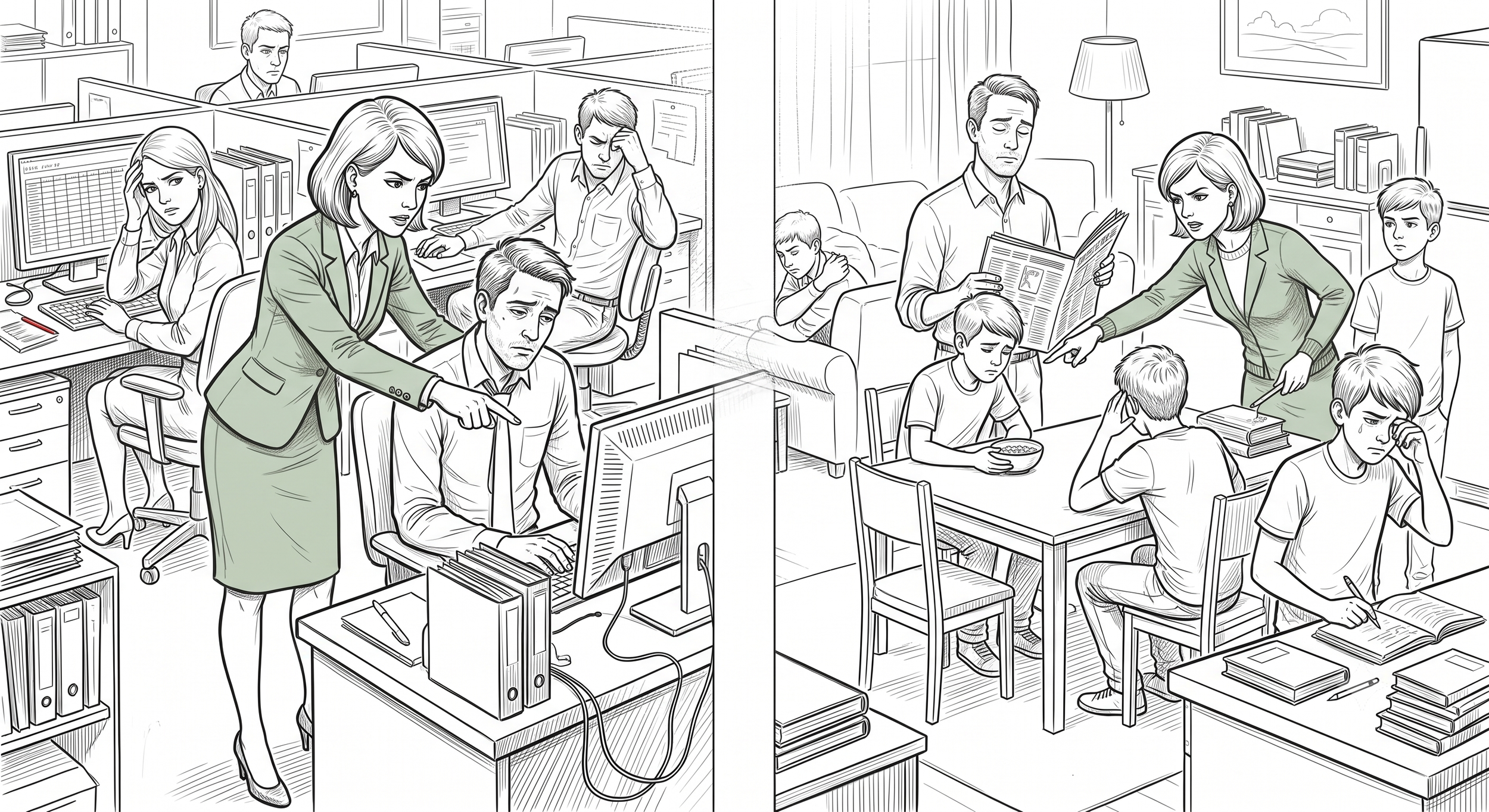
The Director of a high-performing, customer-facing technical support team reached out following an annual, anonymous employee engagement survey. While her tight-knit team exhibited exceptional levels of internal collaboration and trust when resolving software issues for corporate vendors, the diagnostic data revealed widespread systemic discontent regarding her leadership style.
"Sharon" had been a people manager for only a few years, having previously been an individual contributor on this exact team. Because she was now managing her former peers, she adopted a hyper-vigilant, "mother hen" leadership posture. Though she cared deeply about her people and the quality of their output, she struggled to delegate. She checked in too frequently, expected constant availability, and forced her way "into the weeds" of daily tasks—inadvertently suffocating the autonomy of an otherwise highly capable group.
The Diagnostic: Fostering Psychological Safety First
To uncover the root cause of the friction, I initiated independent, confidential 1x1 discovery sessions with each team member following their anonymous company survey, as it was unclear exactly what was causing their dissatisfaction from the survey alone. Absolute confidentiality was established up front. Team members were explicitly reassured that no identifiable details would ever be shared, examples of past reports I’d created for other teams in the company were shared with them, and they were actively encouraged to connect with the other teams I’d worked with to verify the psychological safety of the container.
The diagnostic interviews confirmed a unanimous pattern: the team respected Sharon's intent and recognized her deep personal care, but they were operationally paralyzed by her oversight. Sharon had difficulty delegating and when she did, she micromanaged the team’s work.
To bridge this gap, a dual-track strategy was implemented:
Team-Wide Alignment: After each team member received an Enneagram assessment and debrief, I conducted a series of four 1-hour Enneagram workshops spread across two months to build objective communication, empathy, and vocabulary among the staff.
Targeted Executive Coaching: Dedicated 1x1 sessions with Sharon to explore the internal drivers behind her management behaviors.
The Vertical Depth-Work: Deconstructing the Perfectionist Script
Entering the 1x1 coaching container, Sharon was understandably nervous. She had never engaged in self-focused psychological or developmental work before, naming it as highly intimidating. She was reassured that she maintained complete autonomy over the agenda, and that our work together would introduce healthy, growth-oriented challenge without leaving her feeling overwhelmed.
Through the Enneagram framework, Sharon typed as a Type 1, a perfectionistic type with high standards. While some Type 1 leaders turn their rigid definitions of perfectionism inward, Sharon turned her high standards outward onto other people and the world around her.
Our sessions quickly yielded a foundational vertical breakthrough: Sharon realized her operational "mother hen" behavior at work perfectly mirrored her behavior at home, where she routinely micromanaged her husband and four teenage boys. Her professional over-functioning was an automated, defensive script designed to control systemic variables and mitigate the anxiety of mistakes.
To break this automated loop, we introduced several core interventions:
Cognitive Defusion (ACT): Because Sharon was deeply values-driven, Acceptance and Commitment Principles were utilized to help her unhook from rigid thinking. She learned to identify her perfectionist urges purely as "thoughts" rather than objective operational realities.
Emotional Regulation Tools: Sharon identified healthier somatic outlets for her frustration and learned to de-escalate her hyper-active inner critic.
Cultivating the Witness Consciousness: Over the course of a year, she successfully developed a stable inner witness. This allowed her to observe a control-oriented thought or a somatic marker of anxiety arise, peak, and pass without letting it "grab the wheel" of her communication.
The Long-Term Impact: Metrics-Driven Transformation
By combining collective team insights with individual cognitive defusion work, Sharon stopped policing execution and began cultivating true team empowerment. She stepped out of the operational weeds and allowed her experienced team to lead vendor interactions autonomously.
The long-term organizational ROI materialized rapidly:
Unprecedented Survey Rebound: When the subsequent annual anonymous survey rolled around, the team's professional discontent had completely vanished. Sharon received some of the highest leadership approval scores in the entire global enterprise.
Cultural Stability & Trust: The team preserved its close-knit collaborative culture, now reinforced by a shared Enneagram vocabulary that minimized friction and maximized interpersonal safety.
Executive Promotion: Having demonstrated the rare ability to successfully transition from an individual contributor to a strategic, empowering leader, Sharon was officially promoted to Senior Director the following year.