
CASE
STUDY
Evolving Past the “Achiever” Ceiling
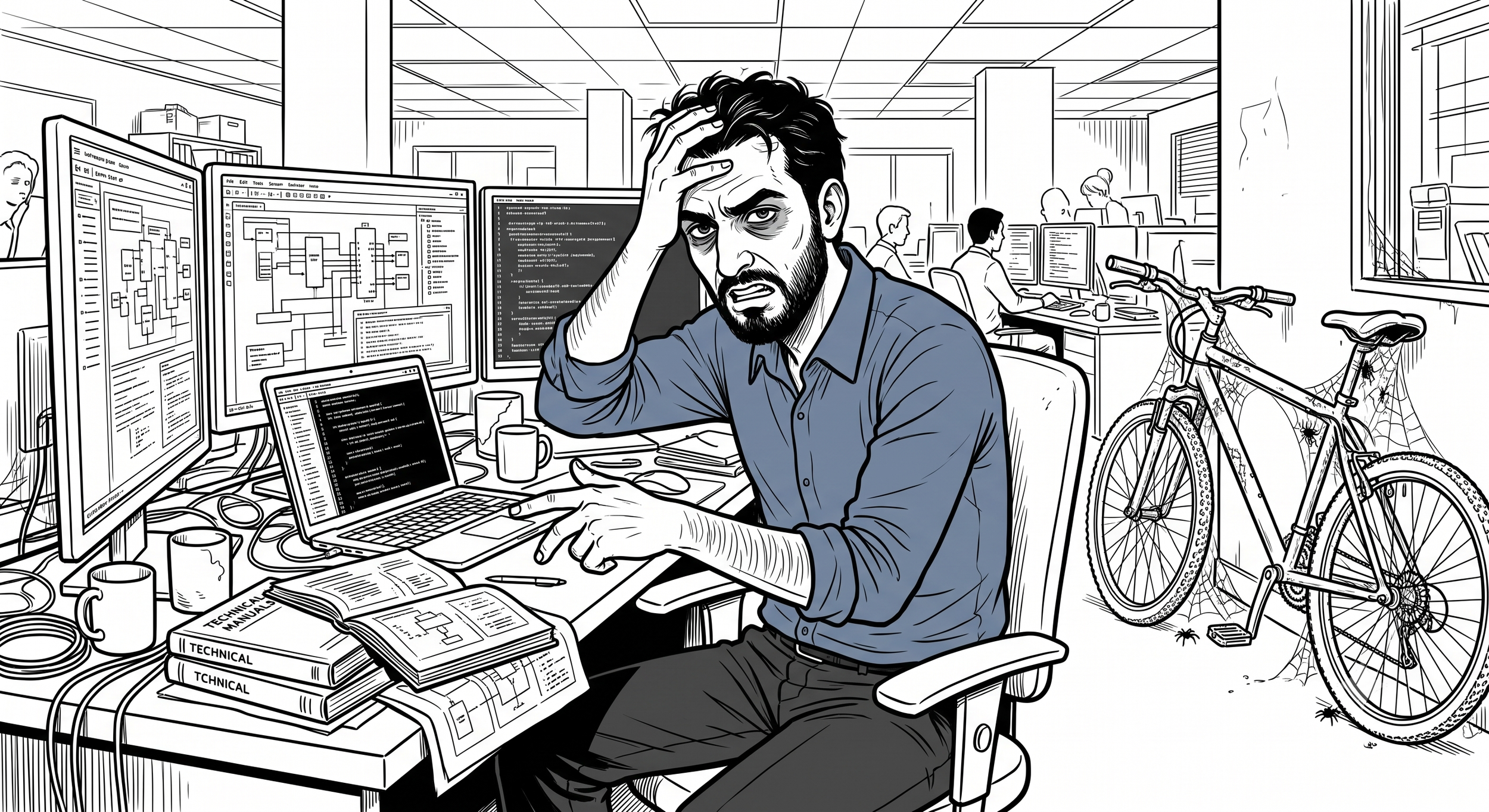
The Catalyst: The The Bottleneck of Solo Expertise
The Director of a global enterprise with 100,000 employees reached out regarding "Karim," a brilliant technical individual contributor with 17 years of experience. Karim was the senior-most expert leading a massive, multi-year infrastructure project designed to eliminate an operational hurdle that cost employees across the globe anywhere from five minutes to several hours a day. The stakes were incredibly high, with corporate plans to eventually scale Karim’s "fix" to external vendors.
Despite his technical dominance, Karim was drowning in frustration. His relationship with his Director had deteriorated, and her attempts to support him only amplified his irritation.
Because Karim had previously been an active, outspoken participant in a team-wide Enneagram engagement I conducted three months prior, a foundational layer of trust and rapport already existed. When his Director suggested 1x1 coaching, Karim welcomed the intervention with genuine enthusiasm.
The Diagnostic: The Need for a 4th-Person Perspective
Through the lens of Adult Development Theory, Karim was operating solidly from a late 3rd Person Perspective (the Achiever mindset). He was an elite performer who valued logic, competence, and flawless execution. However, the enterprise project he was steering presented complex, 4th Person Perspective (Strategic/Systemic) challenges.
This developmental gap created severe behavioral friction:
The Expert Shadow: Karim held deep contempt for anyone without equivalent technical expertise, a classic early 3rd Person Perspective shadow. He viewed the non-technical project manager and cross-functional integration teams as incompetent, which blinded him to the organizational and stakeholder-alignment skills required to bring his technical vision to life.
Compulsive Over-Functioning: Caught in an intense time-scarcity loop, Karim routinely worked exhaustive hours and weekends. He had completely abandoned his personal life—sacrificing mountain biking, music, and friendships—while simultaneously blaming the organization for his burnout.
Unprocessed Grief: Compounding this professional stress was a profound personal loss. Karim’s mother had passed away six months prior. Because his siblings had abdicated their responsibilities, Karim was managing her entire estate alone, trapped in a disorienting loop of acute grief and deep family resentment. Raised in a culture that demanded men suppress their vulnerability and "be strong," he had locked his emotional world away, unaware of how the pressure was bleeding into his workplace relationships.
The Vertical Depth-Work: Meeting Logic with Neuroscience
To safely open a coaching container for a highly analytical thinker, we leveraged data, psychology, and neuroscience as objective "proof" that his current strategy was failing him.
Somatic and Emotional Literacy: We introduced non-clinical psychological frameworks to help Karim identify, tolerate, and apply precise language to his somatic sensations and emotional states. To honor his grief, I normalized the cognitive timeline of loss, sharing that the human brain requires 6 to 12 months just to rationally process the permanent absence of a maternal figure.
The Objective Witness: We targeted his habit of cognitive rumination. Using the framework that "You are not responsible for the first thought that arises, but you are responsible for the next one," Karim learned to observe his automated judgments and internal resentment without immediately believing them or letting them dictate his actions.
Re-establishing Sovereignty: We leveraged Stoic principles and cognitive reframes to begin to dismantle his belief that work was his entire identity. We targeted his boundary-setting failures, challenging him to stop over-functioning at the office and take objective action to resolve his personal burdens regarding his mother’s estate.
The Transformation: Systemic Agility and Reclaimed Life
Over the course of a comprehensive nine-month engagement, Karim successfully evolved his internal operating system to match the complexity of his professional and personal environment.
The results of his vertical growth were apparent across all areas of his life:
Restored Personal Well-Being: Karim began drawing appropriate work-life boundaries, capping his work week at 40 hours. In rare emergencies where overtime was required, he systematically took equivalent comp time during the following week. He returned to mountain biking, reunited with his friends, and began playing music again.
Elimination of Toxic Resentment: Recognizing that doing everything himself was fueling his burnout, he broke his resentment loop by hiring a professional moving company to clean out his mother's estate, allowing himself the mental and temporal space to genuinely grieve.
Collaborative Leadership Agility: At work, the shift was also apparent. His Director reported that Karim became noticeably more patient, tolerant, and respectful of the project management team’s contributions. Rather than demanding everyone match his exact technical profile, he emerged as a highly collaborative, integrated partner capable of leading a multi-national enterprise project with systemic grace.